

Introduction
There is a great deal of debate, controversy, and disagreement in today’s world. Has this always been the case? Yes, I believe so; however, I am also inclined to believe it is heightened and magnified in both its prevalence and intensity due to the prominence of social media. No other time period has had such ease of access to opinions, communication, and information as the current period in history. Social media platforms have given everyone an outlet to voice their opinions, and disagreements are made widely available. In previous generations, for the most part, individuals had to be present to witness such conflicts and proceedings.
Yet in our day, they are written down and codified on platforms for everyone to observe, visit, revisit, and analyze. No longer does the populace have to recall a disagreement from memory, learn of it by word of mouth, or search out obscure historical records. They can go and witness it firsthand because it is inscribed on the walls of X and Facebook seemingly forever.
In light of the highly contentious culture of the modern Christian world, it seems appropriate to spend some time considering what it means to argue, disagree, and dispute in a godly manner. This article is not meant solely to address online controversy; it is relevant to a wide range of situations.
It helps husbands and wives disagree in a godly way.
It aids brothers and sisters when they are at odds.
It offers wisdom for any number of controversial situations.
It would be sad to be known as a Christian controversialist; however, Christians will inevitably be involved in controversy periodically in this fallen world. And since this is the case, Christians should seek to do so faithfully and in a way that honors God.
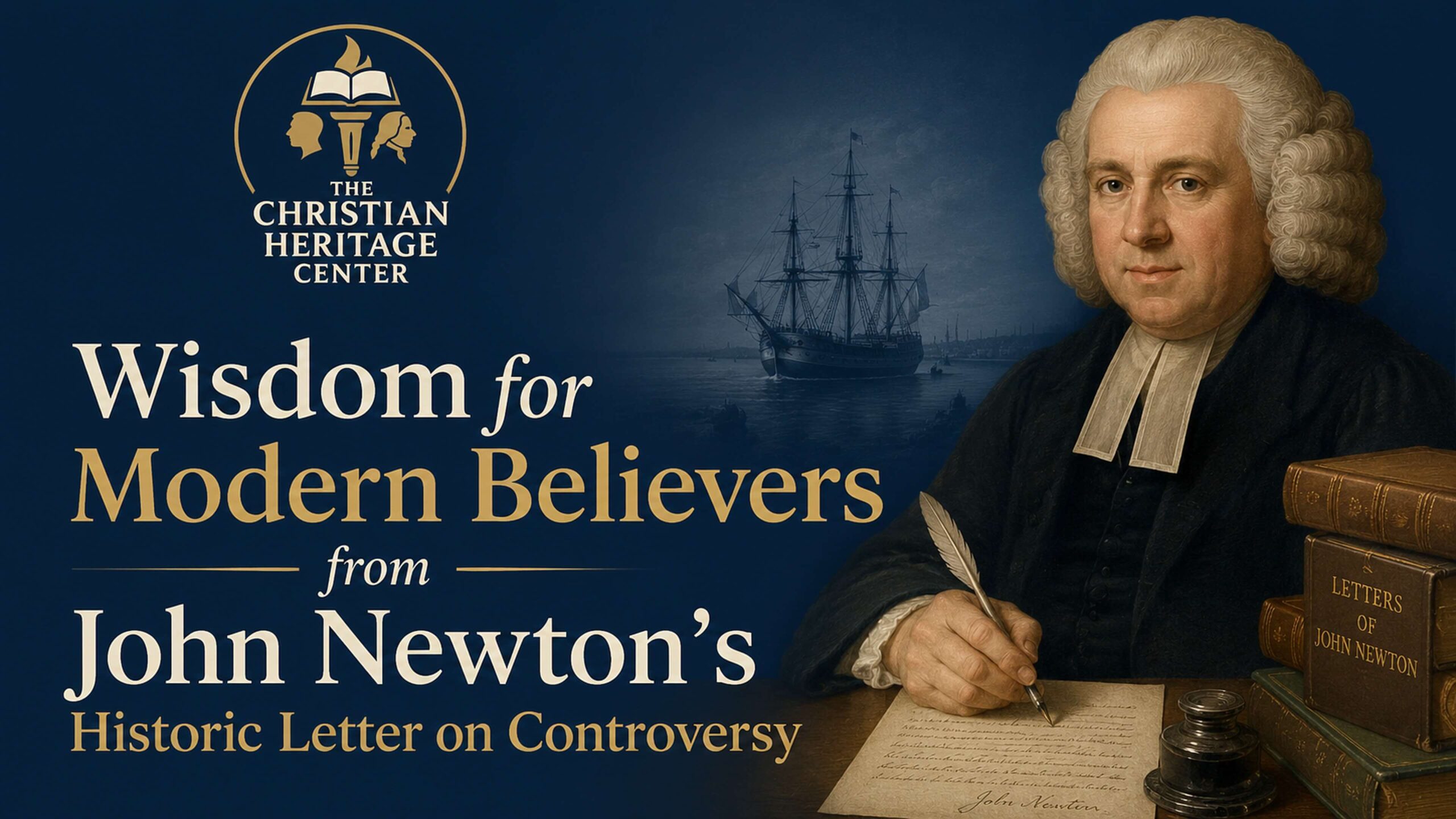
The following letter by John Newton is where we will be drawing wisdom from as we consider this topic. John Newton (1725–1807) is best known for writing the hymn Amazing Grace, but he was also one of the most beloved pastors and letter writers of the eighteenth century. Newton, having been converted from a life of rebellion and sin in which he was involved in the slave trade, spent the remainder of his life preaching and ministering as an ambassador of the amazing grace he had personally experienced. He is a wonderful example and source of wisdom, humility, and pastoral warmth for modern believers.
The letter, commonly known as On Controversy, was written to a fellow minister who was preparing to engage in a public theological dispute of some sort. Although the recipient’s identity is unknown, Newton’s concern is clear and transparent. He was writing to a man convinced of the truthfulness of his position, yet who seemingly was in danger of conducting the controversy in an ungodly manner. Rather than focusing on how to win the argument, Newton provides counsel on how the young minister could contend for the truth while maintaining humility, love, and a Christlike spirit.
I am sure you are starting to see the letter’s relevance. More than two centuries later, this historic letter provides relevant wisdom for Christians in the middle of controversy. Newton acts as a mentor to modern believers, whether pastors, theologians, or Christians at large. His counsel is sound, insightful, and helpful for navigating the tumultuous waters of disagreement in both public and private settings.
First, you will find the entire letter that Newton wrote. Then you will find an outline, followed by a conclusion.
The Letter
A Guide to Godly Disputation
by John Newton
Dear Sir,
As you are likely to be engaged in controversy, and your love of truth is joined with natural warmth of temper, my friendship makes me solicitous on your behalf. You are of the strongest side; for truth is great, and must prevail; so that a person of abilities inferior to yours might take the field with a confidence of victory. I am not, therefore, anxious for the outcome of the battle; but I would have you more than a conqueror, and to triumph, not only over your adversary, but also over yourself. If you cannot be vanquished, you may be wounded. To preserve you from such wounds as might give you cause of weeping over your conquests, I would present you with some considerations, which, if duly attended to, will do you the service of a great coat of armor; such armor, that you need not complain, as David did of Saul’s, that it will be more cumbersome than useful; for you will easily perceive that it is taken from that great armory provided for the Christian soldier—the Word of God. I take it for granted that you will not expect any apology for my freedom, and therefore I shall not offer one. For method’s sake, I may reduce my advice to three heads, respecting your opponent, the public, and yourself.
1. As to your opponent, I wish that before you set pen to paper against him, and during the whole time you are preparing your answer, you may commend him by earnest prayer to the Lord’s teaching and blessing. This practice will have a direct tendency to conciliate your heart to love and pity him, and such a disposition will have a good influence upon every page you write.
If you account him as a BELIEVER, though greatly mistaken in the subject of debate between you, the words of David to Joab concerning Absalom, are very applicable: “Deal gently with him for my sake.” The Lord loves him and bears with him; therefore, you must not despise him or treat him harshly! The Lord bears with you likewise, and expects that you should show tenderness to others, from a sense of the much forgiveness you need yourself. In a little while, you will meet in heaven—he will then be dearer to you than the nearest friend you have upon earth is to you now! Anticipate that period in your thoughts, and though you may find it necessary to oppose his errors, view him personally as a kindred soul, with whom you are to be happy in Christ forever.
But if you look upon him as an UNCONVERTED person, in a state of enmity against God and his grace (a supposition which, without good evidence, you should be very unwilling to admit), he is a more proper object of your compassion than of your anger! Alas! “He knows not what he does!” But you know who has made you different from him. If God, in his sovereign pleasure, had so appointed, you might have been as he is now, and he, instead of you, might have been set for the defense of the gospel! You were both equally blind by nature. If you attend to this, you will not reproach or hate him, because the Lord has been pleased to open your eyes—and not his!
Of all people who engage in controversy, we, who are called Calvinists, are most expressly bound by our own principles to the exercise of gentleness and compassion. If, indeed, those who differ from us have a power of changing themselves, if they can open their own eyes, and soften their own hearts—then we might with less inconsistency be offended at their obstinacy! But if we believe the very contrary to this, our part is not to argue, but in meekness to “gently teach those who oppose the truth—if perhaps God will grant them repentance leading them to a knowledge of the truth.”
If you write with a desire of being an instrument of correcting mistakes, you will, of course, be cautious of laying stumbling blocks in the way of the blind, or of using any expressions which may exasperate their passions, or confirm them in their false principles, (humanly speaking).
2. By PRINTING your article, you will appeal to the PUBLIC, where your readers may be ranged under three divisions:
First, they differ from you in principle. Concerning these, I may refer you to what I have already said. Though you have your eye upon one person chiefly, there are many like-minded with him; and the same reasoning will hold, whether as to one or to a million.
There will be likewise many who pay too little regard to true religion, who have no settled system of their own, and yet are biased in favor of those sentiments which are at least repugnant to the good opinion they naturally have of themselves. These are very incompetent judges of doctrine, but they can form a tolerable judgment of a writer’s spirit. They know that meekness, humility, and love are the characteristics of a Christian temper. And though they treat the doctrines of grace as mere notions and speculations, which, supposing they adopted them, would have no beneficial influence upon their conduct; yet from us, who profess these principles, they always expect such attitudes and dispositions as correspond with the precepts of the gospel. They are quick-sighted to discern when we deviate from such a spirit, and avail themselves of it to justify their contempt of our arguments.
The Scriptural maxim that “man’s anger does not bring about the righteous life that God desires” is verified by daily observation. If our zeal is embittered by expressions of anger, invective (harshness or brazenness), or scorn, we may think we are doing service to the cause of truth, when in reality we shall only bring it into discredit! The weapons of our warfare, and which alone are powerful to break down the strongholds of error, are not carnal, but spiritual. They are arguments fairly drawn from Scripture and experience, and enforced by such a mild address as may persuade our readers, that, whether we can convince them or not, we wish well to their souls, and contend only for the truth’s sake. If we can satisfy them that we act upon these motives, our point is half gained; they will be more disposed to consider calmly what we offer, and if they should still dissent from our opinions, they will be constrained to approve our intentions.
You will have a third class of readers, who, being of your own sentiments, will readily approve of what you advance, and may be further established and confirmed in their views of the Scripture doctrines, by a clear and masterly elucidation of your subject. You may be instrumental to their edification if the law of kindness as well as of truth regulates your pen; otherwise, you may do them harm.
There is a principle of SELF, which disposes us to despise those who differ from us, and we are often under its influence when we think we are only showing a fitting zeal in the cause of God.
I readily believe that the leading points of Arminianism spring from and are nourished by the pride of the human heart! But I would be glad if the reverse were always true, and that to embrace what are called the Calvinistic doctrines was an infallible token of a humble mind! I think I have known some Arminians, that is, people who, for lack of a clearer light, have been afraid of receiving the doctrines of free grace, who yet have given evidence that their hearts were, in a degree, humbled before the Lord. And I am afraid there are Calvinists, who, while they account it a proof of their humility, that they are willing in words to debase the creature and to give all the glory of salvation to the Lord, yet are of a prideful, harsh, and bitter spirit. Whatever it is that makes us trust in ourselves, that we are comparatively wise or good, so as to treat those with contempt who do not subscribe to our doctrines, or follow our party, is a proof and fruit of a self-righteous spirit!
Self-righteousness can feed upon doctrines—as well as upon works! A man may have the heart of a Pharisee, while his head is stored with orthodox notions of the unworthiness of the creature, and the riches of free grace!
Yes, I would add—the best of men are not wholly free from this leaven; and therefore are too apt to be pleased with such caricatures as hold up our adversaries to ridicule—and by consequence flatter our own superior judgments. Controversies, for the most part, are so managed as to indulge—rather than to repress this sinful disposition; and therefore, generally speaking, they are productive of little good. They provoke those whom they should convince—and puff up those whom they should edify!
I hope your article will savor, of a spirit of true humility, and be a means of promoting it in others.
3. This leads me, in the last place, to consider your own concern in your present undertaking. It seems a laudable service to defend the faith once delivered to the saints; we are commanded to contend earnestly for it, and to convince gainsayers. If ever such defenses were seasonable and expedient, they appear to be so in our own day, when errors abound on all sides—and every truth of the gospel is either directly denied or grossly misrepresented.
And yet we find but very few writers of controversy who have not been manifestly hurt by it. Either they grow in a sense of their own importance, or imbibe an angry, contentious spirit, or they insensibly withdraw their attention from those spiritual truths which are the food and immediate support of the life of faith, and spend their time and strength upon matters that are at most but of a secondary value! This shows that if the service is honorable, it is also dangerous. What will it profit a man if he gains his cause and silences his adversary—if at the same time he loses that humble, tender frame of spirit in which the Lord delights, and to which the promise of his presence is made?
Your aim, I doubt not, is good, but you have need to watch and pray—for you will find Satan at your right hand to entice you. He will try to pollute your piety, and though you set out in defense of the cause of God, if you are not continually looking to the Lord to keep you, it may become your own cause, and awaken in you those tempers which are inconsistent with true peace of mind, and will surely obstruct your communion with God! Be upon your guard against admitting anything personal into the debate. If you think you have been ill-treated, this will give you an opportunity of showing that you are a disciple of Jesus, who “when reviled—He did not revile in return; when suffering—He did not threaten, but committed Himself to the One who judges justly.” This is our pattern, thus we are to speak and write for God, and “not paying back evil for evil or insult for insult—but, on the contrary, giving a blessing, since you were called for this.”
The wisdom that is from above is not only pure, but also peaceable and gentle; and the lack of these qualifications, like the dead fly in the jar of ointment, will spoil the fragrance and efficacy of our labors. If we act in a wrong spirit, we shall bring little glory to God; do little good to our fellow creatures; and procure neither honor nor comfort to ourselves! If you can be content with showing your wit and gaining the laugh on your side, you have an easy task!
But I hope you have a far nobler aim; and that, sensible of the solemn importance of gospel truths, and the compassion due to the souls of men, you would rather be a means of removing prejudices in a single instance, than obtain the empty applause of thousands! Go forth, therefore, in the name and strength of the Lord Almighty, speaking the truth in love; and may he give you a witness in many hearts that you are taught of God, and favored with the unction of His Holy Spirit!
Having read Newton’s letter in full, it may be helpful to consider its structure and major themes in outline form.
The Outline
Outline of John Newton’s “On Controversy”
Introduction
The Danger of Winning the Argument but Losing Your Spirit
- Truth is on the believer’s side and will ultimately prevail.
- The greater danger is not defeat, but spiritual injury.
- A controversialist may conquer his opponent yet wound his own soul.
- Newton offers biblical counsel as armor for the Christian engaged in debate.
I. Concerning Your Opponent
A. Pray for Him Before You Write
- Commit him to God’s teaching and blessing.
- Prayer cultivates love, pity, and tenderness.
- A gracious spirit should shape every page written.
B. If He Is a Believer
- Deal gently with him despite his errors.
- Remember that Christ loves and bears with him.
- Remember how much forgiveness you yourself require.
- Anticipate your future fellowship together in heaven.
- Oppose his errors while loving him as a brother.
C. If He Is an Unbeliever
- View him as an object of compassion rather than anger.
- Remember that apart from grace, you would be no different.
- Acknowledge God’s sovereign mercy in opening your eyes.
- Avoid contempt and harshness.
D. Calvinists Especially Must Show Gentleness
- Human beings cannot change their own hearts.
- Only God grants repentance and understanding.
- Therefore, controversy should be conducted with meekness.
- The goal is restoration, not humiliation.
E. Seek Correction, Not Exasperation
- Avoid unnecessary offense.
- Do not place stumbling blocks before the blind.
- Use language designed to persuade rather than provoke.
II. Concerning the Public
A. The First Audience: Those Who Disagree With You
- Everything said about your opponent applies to them as well.
- Many readers will share his convictions.
- Write with a view toward winning them rather than alienating them.
B. The Second Audience: The Watching World
1. They Judge Our Spirit
- Many care little for doctrine.
- Yet they readily evaluate Christian character.
- They expect believers to display humility, meekness, and love.
2. Anger Damages the Cause of Truth
- Human anger does not produce the righteousness of God.
- Bitter zeal undermines the gospel.
- Scorn and ridicule often discredit truth rather than defend it.
3. Spiritual Weapons Must Be Used
- Scripture and experience are the Christian’s weapons.
- Truth should be presented with gentleness.
- Readers should be persuaded that we love them even when we disagree.
C. The Third Audience: Those Who Agree With You
1. They Need Edification, Not Pride
- Sound arguments can strengthen believers.
- Yet harsh controversy may injure them spiritually.
2. Beware of Party Spirit
- There is a natural tendency to despise opponents.
- We often mistake pride for zeal.
- Doctrinal correctness alone does not guarantee humility.
3. Self-Righteousness Can Feed Upon Doctrine
- Orthodoxy itself can become fuel for pride.
- One may possess Calvinistic convictions and yet retain a Pharisaical heart.
- Theological accuracy must be accompanied by genuine humility.
4. Most Controversies Produce Little Good
- They often harden opponents.
- They frequently puff up supporters.
- They tend to encourage pride rather than suppress it.
D. Desired Outcome
- Let your writing be marked by true humility.
- Promote humility in your readers as well.
III. Concerning Yourself
A. Defending Truth Is Necessary
- Christians are called to contend earnestly for the faith.
- Error must be confronted.
- Gospel truth must be defended.
B. Controversy Is Spiritually Dangerous
1. It Can Produce Pride
- Success may inflate self-importance.
2. It Can Produce Anger
- A contentious spirit can develop.
3. It Can Distract From Spiritual Life
- Attention may shift from Christ to merely winning arguments.
- Secondary matters may consume one’s energy.
C. The Great Question
- What profit is there in winning an argument while losing tenderness of heart?
- God’s presence rests upon the humble and contrite.
D. Watch and Pray
- Satan seeks to corrupt good intentions.
- God’s cause can subtly become our own cause.
- Pride and self-interest threaten spiritual usefulness.
E. Avoid Personal Retaliation
- Do not make the debate personal.
- Endure mistreatment in a Christlike manner.
- Follow Christ’s example of patient suffering.
F. Speak the Truth in Love
- Heavenly wisdom is pure, peaceable, and gentle.
- A wrong spirit ruins otherwise good work.
- God is glorified when truth and love remain united.
G. Aim at Souls, Not Applause
- Do not seek wit, reputation, or victory.
- Seek the removal of prejudice.
- Desire the spiritual good of even one soul more than the praise of many.
Conclusion
John Newton’s counsel is straightforward, yet extremely timely and powerful. We ought to remember several things as we reflect on it. The goal of controversy is not merely to prove that we are right, but to honor Christ in the way we contend for the truth. It is possible to possess sound doctrine, make strong arguments, and successfully expose error, while at the same time displaying pride, harshness, impatience, a mean spirit, and a lack of love. Newton understood this danger well. He recognized that the greatest threat in controversy is often not found in our opponent, or even in potential loss of the argument, but in our own hearts.
There is much counsel for the current social media age as well. In the age of Facebook and especially X, it is important to remember that you can win an argument and still lose. You can tell the truth and be wrong. You may gain approval from those who already agree with you, yet all you have done is provoke the one you disagree with. You may successfully defend truth while simultaneously damaging your own witness through a contentious and harsh spirit. Truth accompanied by scorn and ridicule more often discredits the truth than defends or establishes it. The Christian is not merely called to speak the truth in any manner they feel or desire is appropriate; they are called to speak the truth in a manner that seeks to persuade and convince their opponent that they are loved, despite the disagreement.
Newton’s letter reminds us to consider at least three things whenever we find ourselves in disagreement: our opponent, our witness, and our own hearts. We must remember that the person on the other side of the argument is not merely an adversary to be defeated, but a soul that either knows Christ or doesn’t. We must remember that others are observing not only the content and nature of our arguments, but the spirit in which they are made. And we must remember that pride, vindictiveness, and bitterness can easily disguise themselves as zeal for the truth.
This does not mean that Christians should avoid controversy altogether. The faith once delivered to the saints must be defended. Error must be confronted. False teaching must be addressed. Yet all of these duties must be carried out with humility, gentleness, patience, and love. The Lord who calls us to contend for the faith is the same Lord who calls us to be clothed with such virtues. Quite possibly, Newton’s greatest contribution in this letter is reminding us that Christian controversy is not merely a test of our theology and knowledge; it is also a test of our character and godliness.